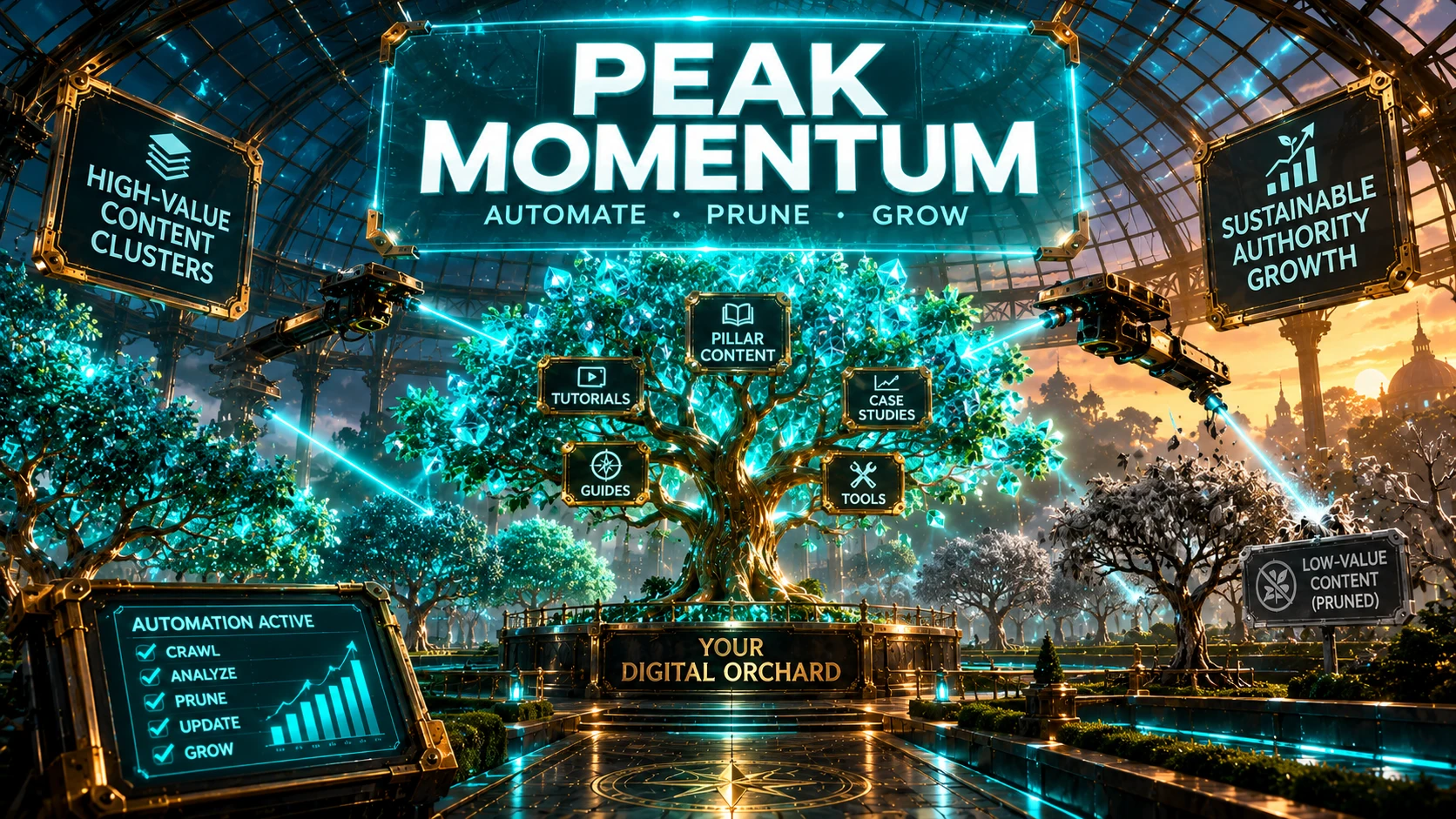
As your journey expands, the challenge changes from finding new lands to maintaining the orchard you have planted. In the landscape of 2026, working smarter through digital efficiency means realizing that an overgrown site is a slow site. To maintain peak momentum, you must implement automated systems that prune away the “dead wood” of stale information, allowing your brand’s authority to bloom in the eyes of AI engines.
Key takeaway: In the AI era, content decay is a silent signal of brand stagnation; automated pruning is required to maintain a ‘high-freshness’ crawl loop [1].
The Decay Dilemma: Why Stale Content Kills AI Trust
AI models like GPT-5 and Claude 4 are trained to prioritize helpfulness and accuracy. When your site contains multiple versions of the same information or undated blog posts from three years ago, you create “probabilistic noise.” This ambiguity forces the AI to look elsewhere for a more certain answer. By focusing on modern search engine optimization, you learn that removing one stale page is often more valuable than publishing two new ones [2].
This is where internal workflow optimisation becomes a competitive edge. By automating the tracking of your content’s age, you ensure your “Discovery Loop” never refers to a version of your business that no longer exists [3].
Key takeaway: Automated notification workflows for stale content prevent the ‘Discovery Loop’ from recommending outdated or incorrect business facts.
Automated Pruning: The ‘Work Smarter’ Way to Scale
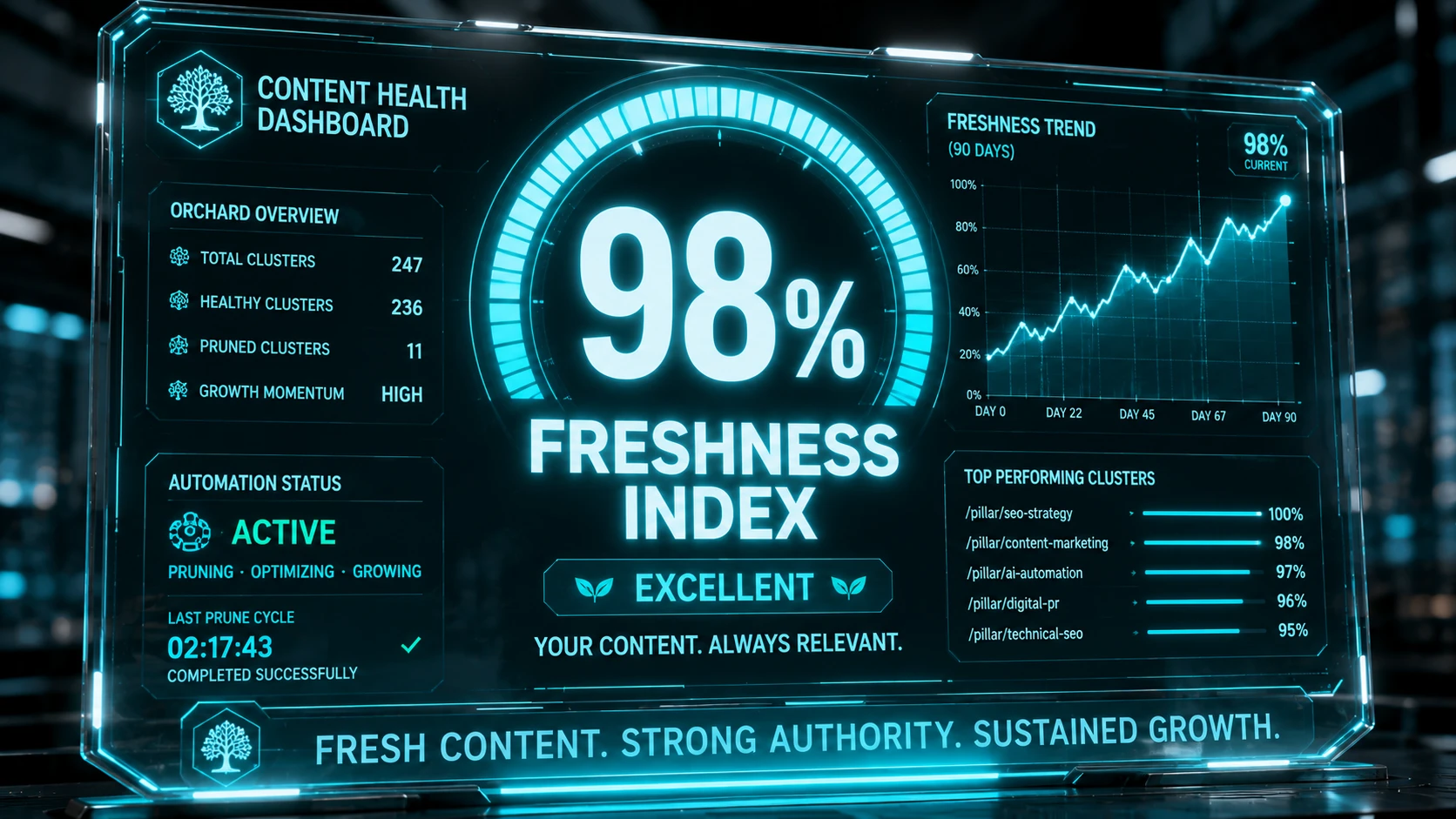
Scaling your operations isn’t just about adding more—it’s about scaling organization proof. If your “system” is weighed down by 500 pages of low-value content, your crawl budget will be exhausted before the AI reaches your most important conversion pages [4]. Automated pruning uses data—such as zero-click metrics and “last modified” dates—to trigger a simple guide to schema update or a page deletion.
Key takeaway: Pruning low-value pages consolidates your ‘Topical Authority’ into fewer, high-strength units that are easier for AI bots to synthesize.
Pruning vs. Refreshing: The 2026 Strategy
| Content Signal | Action Required | Automation Trigger |
|---|---|---|
| Thin Content (<300 words) | Consolidate or Delete | Low Word Count Alert |
| Outdated Facts (>12 months) | Refresh & Update dateModified | Freshness Threshold Workflow |
| High Traffic / High Decay | Rewrite 40-word lead | Direct Answer Performance Drop |
| Zero Impressions (>6 months) | Prune | GSC Data API Integration |
Maintaining the Living Ledger
Peak momentum is not a destination; it is a process. To keep your team moving, you must integrate your content maintenance into your daily business process automation. When your CRM identifies a change in your service offering, a notification workflow should automatically flag every relevant page on your site for an update. This ensures your responsiveness signal remains high across the entire web.
Key takeaway: Peak momentum is achieved when your internal business processes automatically flag content for refresh or removal based on real-time data.

Conclusion: Engineering a Self-Cleaning Fleet
The goal of “Working Smarter” is to build a site that maintains its own authority. By implementing automated pruning and maintenance workflows, you ensure that every time an AI bot visits your site, it finds only the highest-quality, most citable evidence of your expertise. This sets the stage for positioning your brand as the ultimate authority in your niche.
As you refine your orchard, remember: the strength of the harvest depends on the health of the branches you choose to keep [5].