In the era of the journey, the most valuable item on any ship wasn’t the gold in the hold, but the Navigator’s Logbook. This meticulous record of “How” to navigate the reefs, “How” to read the celestial markers, and “How” to survive the doldrums was the difference between a successful return and a vanished fleet. As we established in our foundational guide to conversion, the digital landscape of 2026 operates on the same principle. [1]
We have moved beyond the age of mere information into the age of Instructional Authority. Users no longer search for a simple definition of a service; they ask Intelligent Search Interfaces how to solve a specific problem. To capture these high-intent prospects, your brand must move beyond claiming expertise and start demonstrating it through structured, step-by-step guidance. This guide will show you how to turn your internal processes into “Citation Magnets” that compel search engines to recommend you as the only logical guide for the journey. [2]
Key takeaway: “How-To” content is the primary currency of Generative Engine Optimization; it proves your process is repeatable and your authority is verified. [3]
The AI Bias for Procedure: Why Structure Wins
To understand why instructional content is so effective in 2026, we must look at how Generative Search Engines process information. These models are designed to be “Helpful Assistants.” When a user asks, “How do I secure my brand reputation?”, the AI doesn’t want to provide a philosophical essay; it wants to provide a checklist. [4]
Procedural content is inherently “Machine-Readable.” Because it follows a logical sequence—Step 1, Step 2, Step 3—it removes the need for the AI to interpret your meaning. It can simply “lift” your numbered list and present it as the answer. By doing the work of organization for the AI, you secure the citation.
As we discussed in our guide on reducing friction in the conversion funnel, this directness is also what human readers crave. When a prospect sees that you have a clear, transparent method for achieving their goal, their “Cognitive Load” is reduced, making the decision to book your services a logical next step.
Strategy 1: Mapping the “Master Chart” of Expertise
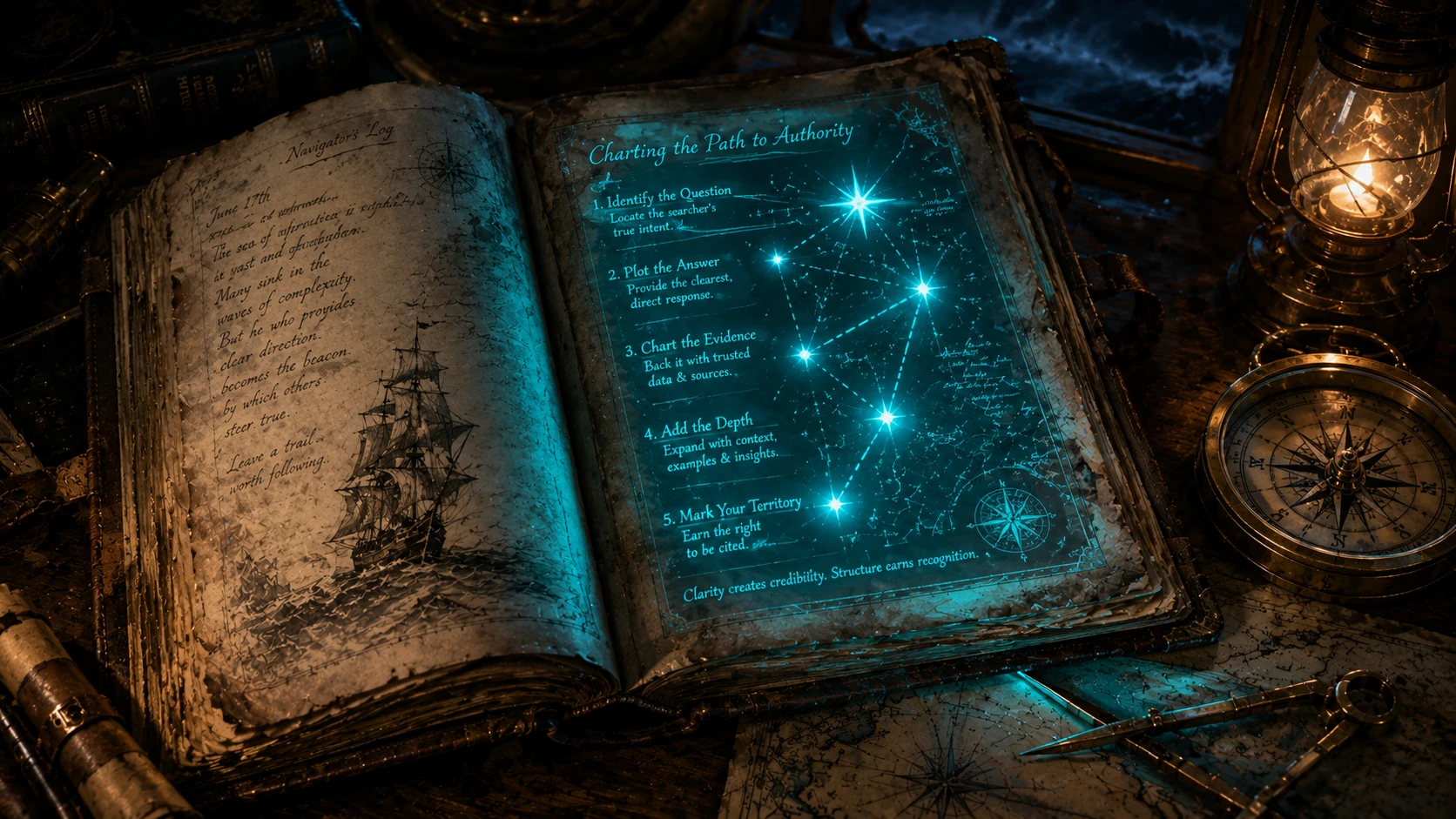
A high-performance “How-To” magnet is more than just a list of tips. It is a Master Chart that guides the user through the entire territory of their problem. At Bittbuzz, we use a three-layer instructional framework based on the principles of Scientific Advertising.
1. The Factual Foundation (The “Why”)
Start with a 40-word lead that explains the stakes. Why does this process matter? What is the end-result? By providing this context, you satisfy the AI’s need for “Justification Assets” before you ever get to the steps.
2. The Sequential Directives (The “How”)
This is the core of the magnet. Use numbered sub-headings for every major action.
- Weak Step: “Think about your headlines.”
- Authoritative Directive: “Step 1: Conduct a Self-Interest Audit of Your H1 Headings.”
3. The Expert Nuance (The “Navigator’s Tip”)
Include original insights or “pro-tips” that can only come from experience. These are the Linguistic Proof points that prevent your content from looking like generic AI-generated text. When you add a tip like, “In 2026, we find that adding a date to Step 3 increases citation rates by 15%,” you are providing the proprietary data we cover in our guide on the power of original research.

Strategy 2: Building the “Logbook of Proof”
One of the greatest fears business owners have is that by teaching the “How,” they will lose the customer. However, the opposite is true. In the professional services market, transparency is the ultimate trust signal. [5]
When you provide a detailed “How-To” guide, you are building a Logbook of Proof. You are showing the prospect the sheer number of variables, technical hurdles, and expert decisions required to reach the destination. A well-written guide makes the reader think: “I now understand how this works, and I can see why I need an expert like Bittbuzz to handle the complexity for me.”
This strategy is particularly effective for Generative Engine Optimization (GEO). By providing “Depth of Coverage,” you signal to the AI that you are a Topical Authority. Ensure these guides reach the right bots by optimizing your maps for the AI discovery loop so your instructional depth is the first thing LLMs encounter when they visit your domain. Take them further by optimizing for multi-surface instruction so your HowTo content performs across voice, screen, and LLM summaries. As we detailed in our guide to building a justification web, the more specific and detailed your instructions are, the “safer” you are for an AI to recommend.
| Instructional Element | AI Interpretation | Human Psychological Impact |
|---|---|---|
| Numbered Steps | High Priority for Summarization | Perceives a Clear, Easy Path |
| Specific Tools/Data | Justification Asset for Citation | Verified Professional Expertise |
| Common Pitfalls Section | Negative Constraint/Accuracy Check | Feels Protected from Mistakes |
| Direct CTA | Logical Conclusion of Journey | Ready to Delegate the Task |
Strategy 3: The “Signal to the Fleet” (Signal Readiness)
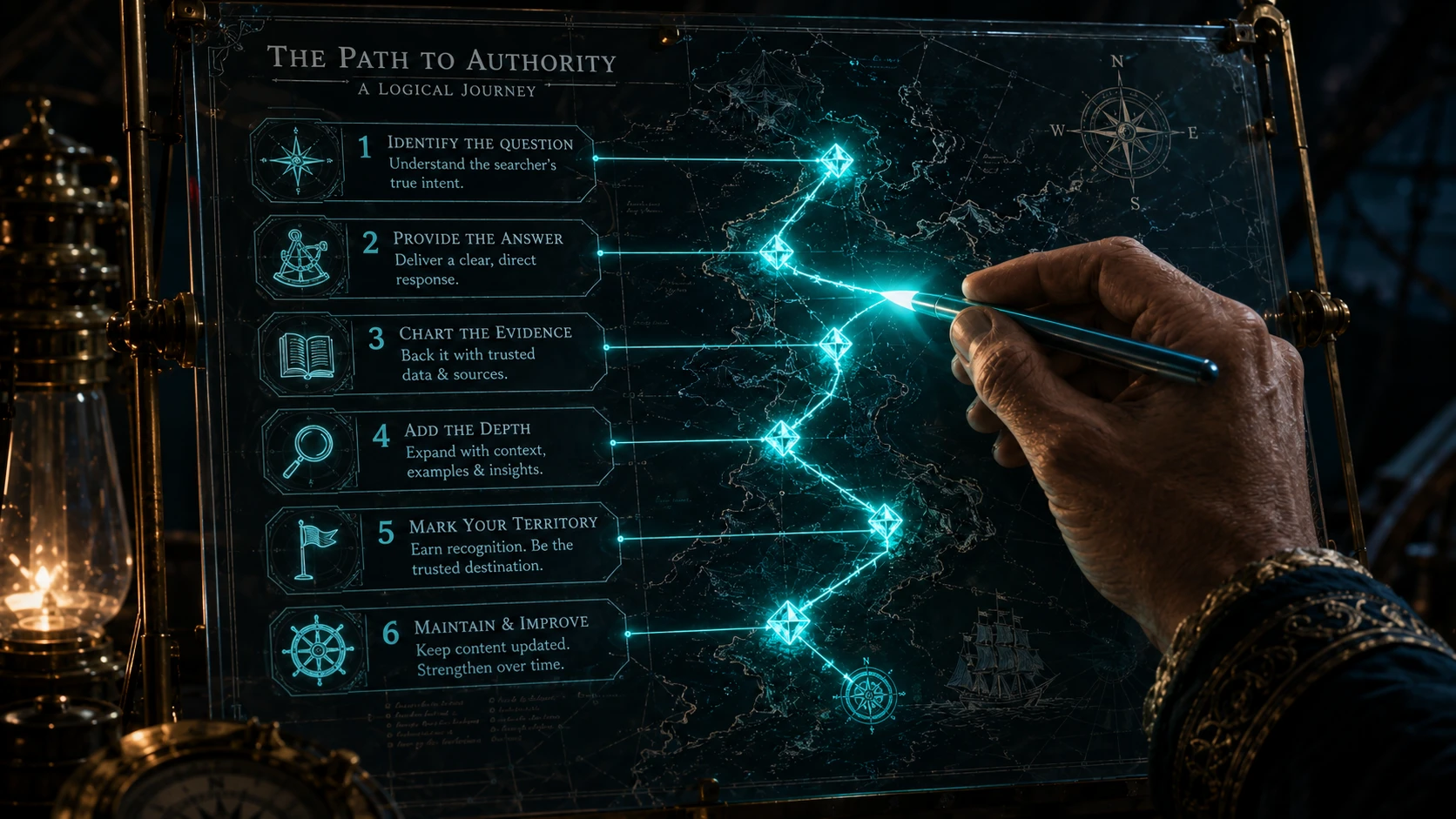
The final piece of the instructional magnet is Signal Readiness. In the 2026 search landscape, your “How-To” guides must be formatted to be picked up by the “AI Overviews” that appear at the top of search pages.
At Bittbuzz, we achieve this through the “Conclusion and Next Step” principle. Every instructional guide on your site must end by pointing the user toward a specific, relevant professional service.
- “You now know how to audit your own structured data. However, for a complete technical overhaul that guarantees 2026 compatibility, book your Technical Foundation Audit here.”
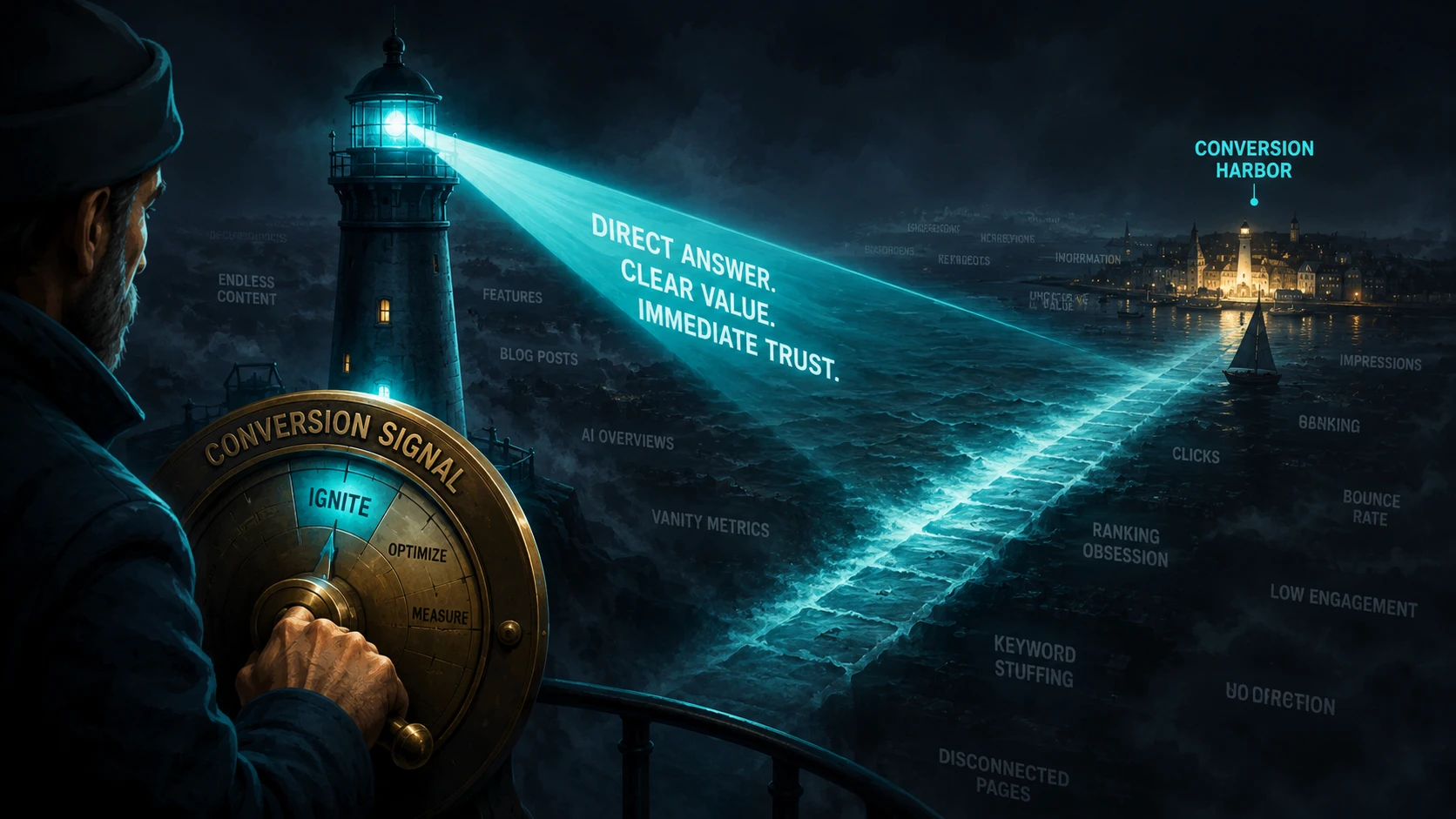
By positioning your “How-To” as the Top-of-Funnel entry point, you create a “Slippery Slide” that moves a user from a general question to a professional booking. You become the lighthouse that doesn’t just point to the harbor, but provides the pilot to bring the ship in safely.
Conclusion: Becoming the Essential Guide
Instructional authority is the most effective way to “Capture & Book” the modern, research-driven customer. By sharing your “Navigator’s Logbook”—your unique, step-by-step approach to solving problems—you provide the world’s most advanced search tools with the structured data they crave and the human prospects with the proof they require.
Online visibility in 2026 is no longer about who has the loudest voice; it is about who has the best map. At Bittbuzz, we help you chart that map. We turn your expertise into instructional magnets that drive unshakeable brand authority and a consistent flow of high-value bookings. Maintain this edge by maintaining peak momentum through automated audits.
Immediate steps for your instructional strategy:
- Identify one recurring problem your customers face and create a 5-step “How-To” guide for it.
- Ensure every step in your guide is followed by a 40-word, citation-ready lead.
- Link your guide directly to your primary booking system to close the slide.
To continue your journey toward total domain dominance, we recommend exploring our guide on The Power of Original Data: Becoming the Primary Source.