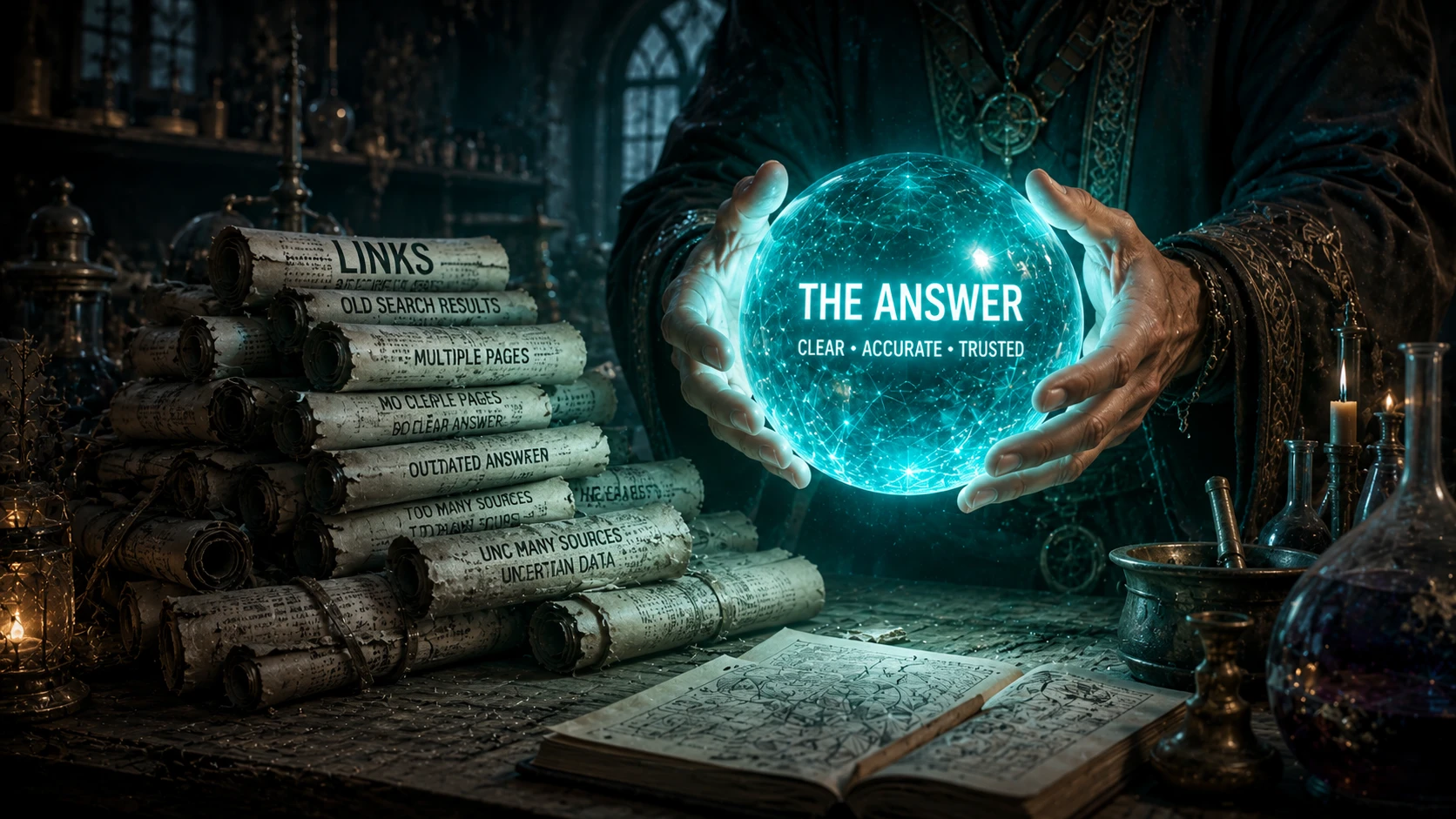
In a digital landscape increasingly defined by Generative Search Engines, the internal organization of your website has become just as critical as the words your customers see on the screen. To maintain high visibility in 2026, your business must move beyond traditional text and embrace a technical framework known as structured data [1]. This framework ensures that your most important information is machine-readable and ready for citation by the world’s most advanced search tools.
As we established in our complete guide to modern search, success in the AI era is no longer about keyword repetition. It is about becoming a “Verified Entity.” Think of your website as a complex loom. Without a pattern, the threads are just a mess of color. Schema.org is the master pattern that allows Intelligent Search Interfaces like ChatGPT and Perplexity to see the beautiful, finished tapestry of your brand [2].
Key takeaway: High-quality technical organization is the primary method for ensuring your business is perceived as a verified and trustworthy entity by modern search systems.

The Identity Shift: From Keywords to Entities
For the first two decades of the internet, search was a game of matching words. If a user searched for “professional marketing services,” the system looked for pages that repeated those terms. However, we have now entered the era of Entity-Based Search.
Generative search engines no longer look for simple word matches; they attempt to understand “Entities”—which are real-world things like people, places, and your business. When an AI visits your site, it isn’t just reading text; it is attempting to build a Knowledge Graph. This is a complex map of facts about your business, such as your founding date, your specific industry expertise, and your local service area.
Without a technical structure to define these facts, a search system may experience an “Identity Crisis.” Because these interfaces are programmed to avoid providing incorrect information to their users, they will often skip over an unorganized website in favor of a competitor who has provided a clear, machine-readable “digital passport.” This verified identity is the foundation of the reputation strategy we discuss in our guide on why brand reputation matters more than links now.
The Core Labels: Building Your Digital Passport
You do not need to label every single word on your website to achieve visibility. Instead, we recommend focusing on high-leverage labels that provide the strongest trust signals to modern search surfaces.
1. The Organization Label (Your Business ID)
This is the most critical component of your technical foundation. It connects your website to your official logo, your social media presence, and your physical headquarters. It tells the search engine exactly who you are and where else your brand can be verified. By establishing these connections, you improve your E-E-A-T (Experience, Expertise, Authoritativeness, and Trustworthiness), which is the primary metric AI systems use to choose their sources [3]. For a deeper look at automating this proof at scale, read our guide on how automated entities provide organization proof.
2. The LocalBusiness Label (Proving Physical Existence)
For businesses that serve a specific city or region, the LocalBusiness label is essential. It provides a verified, structured version of your NAP (Name, Address, and Phone number). This ensures that when a user asks an Intelligent Search Interface for a local expert, your business is recommended with 100% accurate contact details. This consistency is a cornerstone of the trust signals we explore in our guide on why brand reputation matters more than links now. For a deeper look at how proximity and authority compete in modern local recommendations, see our guide on how to win in local AI search.

The FAQ Label: The Citation Magnet
If you want to be the direct answer to a customer’s question, you must use the FAQ label. This structure takes your most important questions and answers and serves them to the generative engine in a format it can easily digest.
Content formatted this way is significantly more likely to be lifted and quoted in the “AI Overviews” of Google or the summary blocks of ChatGPT. By providing these “citation-ready” facts, you are actively helping the search interface do its job, which in turn increases your brand’s prominence. We explore how this specific type of writing connects to overall visibility in our deep dive into how to use customer reviews for better visibility. Once your FAQ labels are in place, learn How to create high-authority instructional content to maximize your citation potential.
How Structured Data Drives Business Growth
Implementing these technical labels is a strategic move that has measurable impacts on your business. Data from leading search studies indicates that websites with comprehensive structured data can see a 15% increase in click-through rates compared to those without [4].
This growth happens because organized data allows for “Rich Results”—those enhanced search listings that include star ratings, price ranges, and direct answers. When your listing looks more professional and informative than a competitor’s simple link, customers are naturally more likely to trust your brand.
| Information Type | Without Structure (AI Guesses) | With Structure (AI Verifies) |
|---|---|---|
| Pricing Details | AI may confuse prices with dates | AI identifies the exact cost instantly |
| Reviews | Seen as generic blocks of text | AI verifies a 5-star reputation |
| Services | AI must infer what you do | AI catalogs your exact service list |
| Availability | Customers must click to find out | AI confirms ‘In Stock’ or ‘Open Now’ |

Conclusion: Future-Proofing Your Digital Presence
Technical organization is the bedrock of modern online visibility [5]. While the words you write are essential for the customer, Schema.org is the language you use to speak directly to the AI. By organizing your website with the precision of a master architect, you create a “competitive moat” that makes it very difficult for late-moving competitors to displace your brand.
At Bittbuzz, we specialize in building these technical foundations. We ensure your business data is clean, your labels are accurate, and your brand is ready to be cited by the most advanced search systems in the world.
Immediate steps for your technical foundation:
- Use a digital validator tool to see if your site currently uses Schema labels.
- Prioritize the “Organization” and “FAQ” labels to boost your citation readiness.
- Ensure your business address and phone number are identical across all your code.
To continue building your digital authority, we recommend exploring our full library of visibility guides, including our guide on why brand reputation matters more than links now, our guide on how to use customer reviews for better visibility, and our deep dive into Keeping Your Website Fresh for 2026.