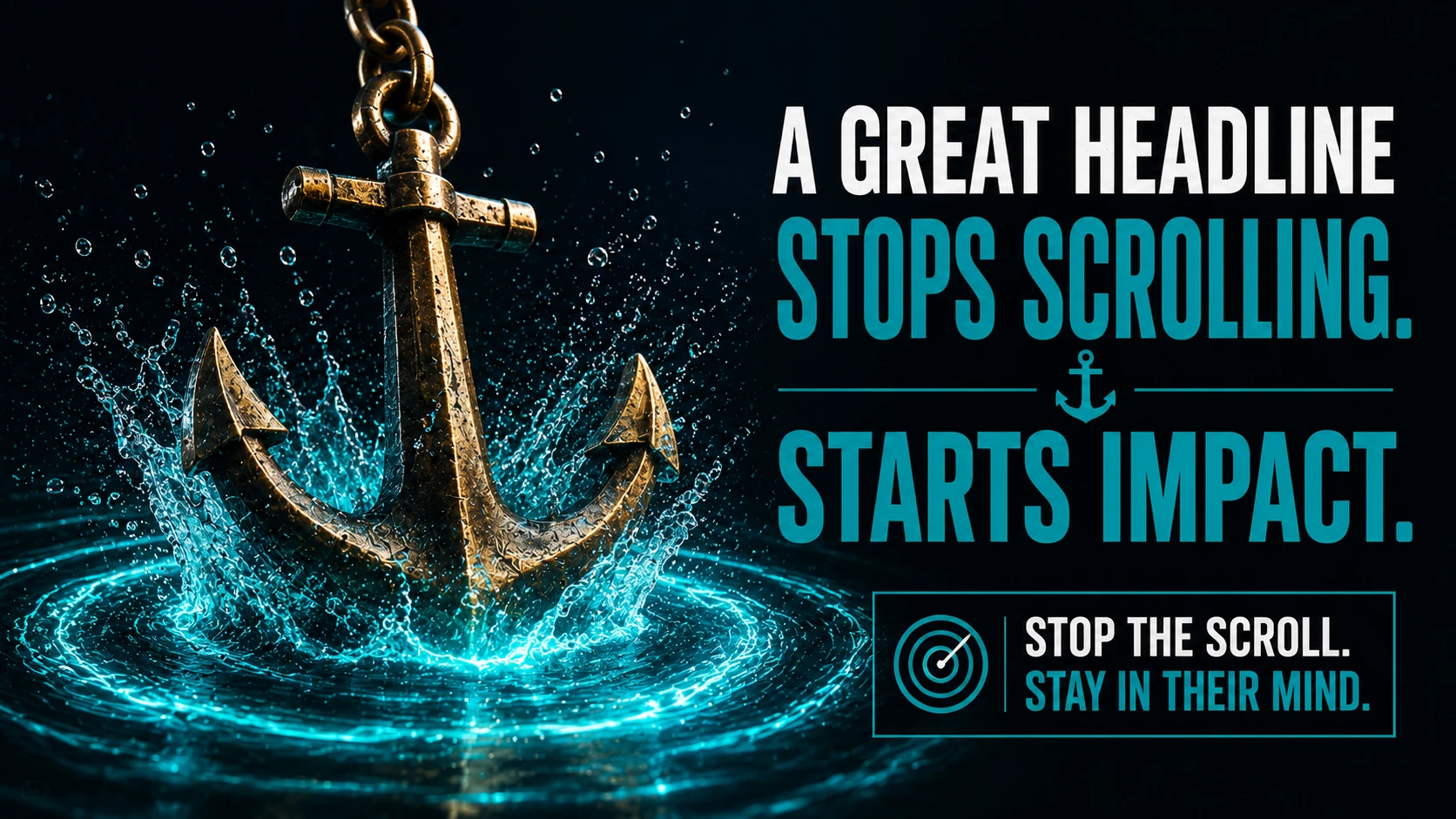
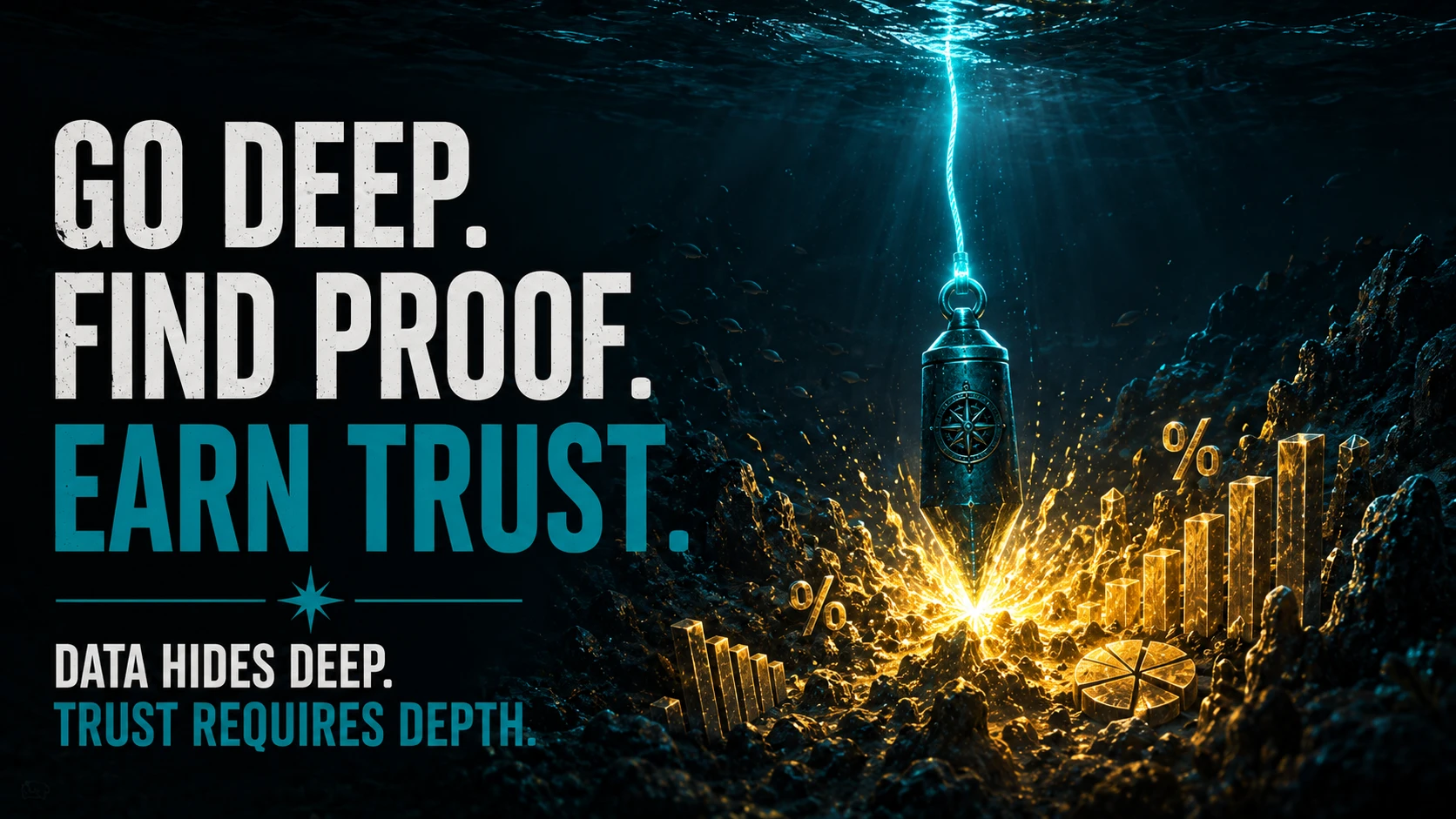
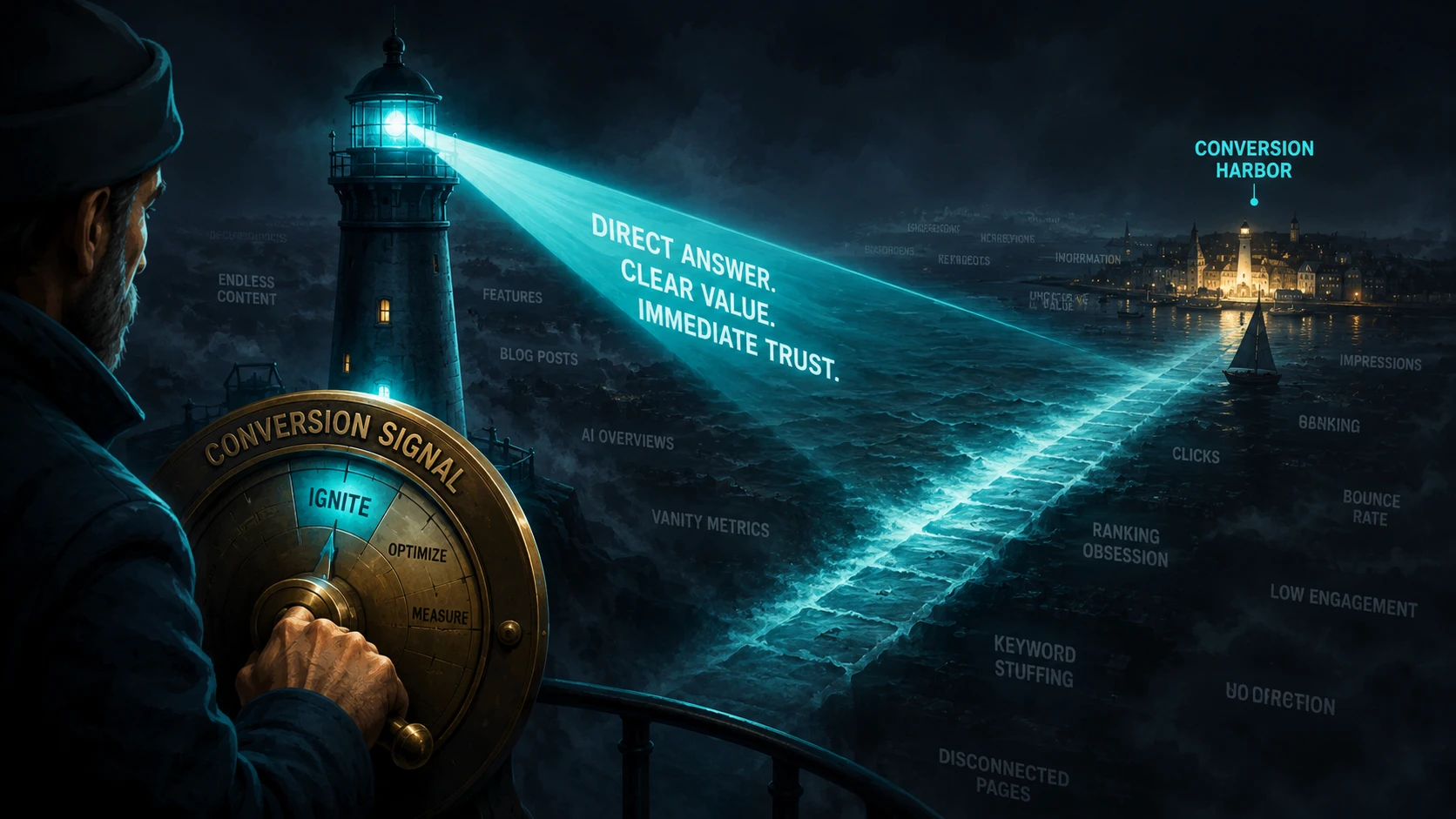
In the vast and often stormy ocean of the 2026 digital landscape, your website is just one of millions of possible destinations. As we established in our foundational guide to conversion, visibility in a search engine is merely the signal that you exist. The moment a user—or an AI search bot—reaches your site, a high-speed evaluation begins. In less than three seconds, the visitor decides if you are the solution they need or just another missed opportunity.
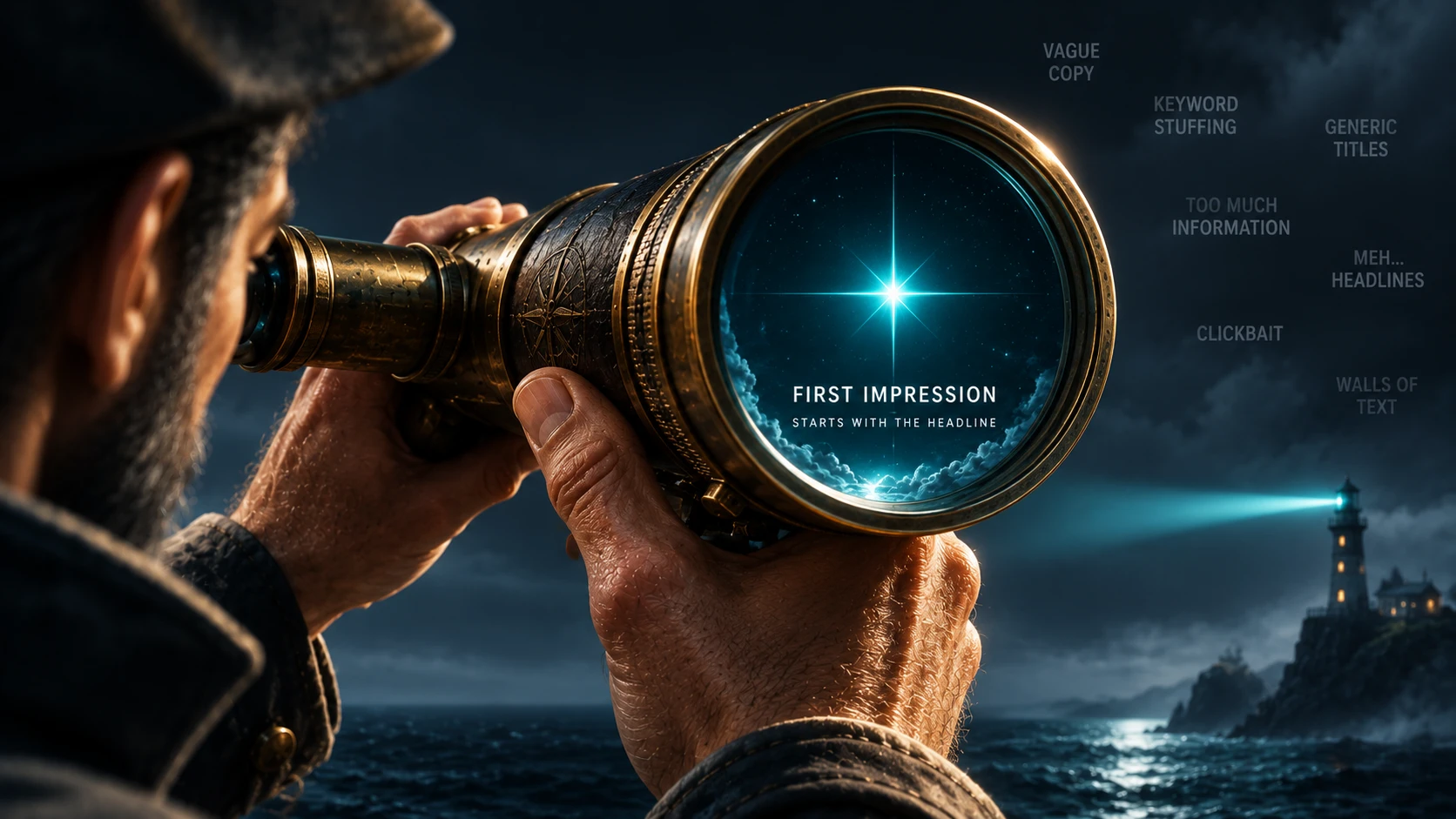
This decision rests almost entirely on your Headline. [1] Whether it is the large text at the top of your homepage or the title of a guide cited by an Intelligent Search Interface, the headline is the “Primary Beacon” of your digital presence. It is the first impression that either commands a safe docking or invites a quick exit. To book more customers, you must master the art of writing headlines that promise a specific, desirable end-result.
Key takeaway: The headline is the primary filter of your business; its only job is to stop the right prospect and compel them to read the next sentence.
The Caples Framework: Charting the Three Classes of Success
To understand how to write headlines that work in 2026, we look to the tested methods of John Caples. Through decades of data, Caples identified that the most successful headlines fall into three distinct classes. Understanding these is essential for any business owner looking to move beyond the “Click-Based” era we discussed in our guide on the shift from clicks to answers. [2]
1. The Self-Interest Headline
This is the most powerful tool in your navigational kit. [3] It speaks directly to the customer’s desire for a better result or a solved problem. It answers the question: “How will this help me?”
- Weak: “Our Visibility Services.”
- Strong: “How to Chart a Path to 40% More Bookings in 90 Days.”
2. The News Headline
Humans—and Intelligent Search Interfaces—are biologically programmed to seek out new information. If you have a new process, a new discovery, or a 2026 update, put it in the headline.
- Weak: “We Use New SEO Techniques.”
- Strong: “New 2026 Data: Why Entity Signals Now Outrank Traditional Backlinks.”
3. The Curiosity Headline
This approach triggers a psychological “open loop” that the reader feels compelled to close. While effective, curiosity should be used sparingly in professional services, as it can feel like “clickbait” if the promise isn’t immediately fulfilled.
Key takeaway: For professional services, headlines that combine Self-Interest with News provide the highest conversion rates and the most frequent AI citations.

Engineering for the AI Citation Layer
In the age of Generative Engine Optimization (GEO), you are no longer writing just for a person scrolling through a page. You are writing for an AI that is looking for a “Title” to give its synthesized answer.
If you use a headline that is too “clever” or metaphorical, the AI may fail to categorize your expertise. For example, a headline like “The Secret Sauce of Search” is invisible to an AI. A headline like “5 Strategies for Optimizing Structured Data” is a citation magnet.
As we detailed in our guide to technical website organization, the AI needs to associate your content with a specific “Entity.” A clear, descriptive headline is the fastest way to facilitate this association. [4] When the AI cites you, it will often use your H2 or H3 headings as the bullet points in its response.

Conclusion: Opening the Gates to Booking
Your website is a sequence of thresholds. The headline is the first and most critical gate. By applying the psychological principles of the masters—focusing on self-interest, news, and specificity—you ensure that your brand is never ignored. [5]
In the 2026 search landscape, a headline that commands attention is also a headline that commands authority. When you make it easy for humans to read and machines to cite, you position your business as the primary source of truth in your industry.
At Bittbuzz, we don’t just write headlines; we engineer gateways to customer growth. We ensure that your first impression is unshakeable and that your brand remains at the center of the modern search journey.
Immediate steps for your headlines:
- Audit your top 5 pages: Does the main headline offer a direct benefit?
- Replace vague headings with specific, number-driven claims.
- Ensure every major heading is followed by a citation-ready summary.
To see how these headlines work within a complete technical framework, we recommend exploring our simple guide to website organization. You can also continue your journey by learning how to build a justification web for your claims. From here, focus on keeping your website fresh and direct to maintain the momentum your headlines create.